Vibe Coding Is Changing Software Forever
The Rise of AI-Native Creation and the Death of Traditional Development Bottlenecks
Software development is entering one of the biggest transformations in history.
For decades, building software required:
- engineers
- coding expertise
- technical teams
- long development cycles
- expensive infrastructure
- complex workflows
- endless debugging
- specialized knowledge
If you wanted to launch a startup, app, automation platform, marketplace, creator tool, or social network, you usually needed:
developers first.
But AI is changing that equation rapidly.
A new paradigm is emerging:
vibe coding.
And it may fundamentally reshape:
- software
- startups
- creator economies
- marketing
- communities
- automation
- digital entrepreneurship
forever.
What Is Vibe Coding?
Vibe coding is the idea that software creation is becoming:
conversational, visual, AI-assisted, and creativity-driven.
Instead of writing thousands of lines of code manually, creators increasingly:
- prompt AI systems
- visually orchestrate workflows
- describe ideas conversationally
- remix templates
- connect modular systems
- automate logic using AI agents
The focus shifts away from:
syntax and engineering complexity
toward:
ideas, creativity, systems, and execution.
In many ways, vibe coding turns software creation into:
digital world-building.

The Old Software Model Is Breaking
Traditional software development was built around scarcity.
Only highly trained developers could:
- build applications
- launch platforms
- automate systems
- create tools
- deploy infrastructure
This created enormous barriers.
Most people with brilliant ideas never launched anything because:
- coding was too difficult
- teams were too expensive
- development was too slow
- technical knowledge was too specialized
But AI dramatically lowers these barriers.
Now creators can increasingly:
- generate websites
- build workflows
- create AI agents
- automate systems
- generate images
- create videos
- deploy apps
- publish content
- build communities
with minimal traditional coding experience.
This changes the economics of software completely.
AI Is Becoming the New Programming Layer
The most important shift is that:
AI is becoming the interface.
Humans increasingly communicate intentions.
AI increasingly handles implementation.
Instead of manually coding:
- APIs
- databases
- workflows
- interfaces
- automations
users increasingly describe:
- goals
- systems
- behaviors
- experiences
and AI assembles the infrastructure.
This transforms software creation from:
engineering-first
to:
creativity-first.
The Rise of AI-Native Builders
The next generation of builders may not even identify as:
- developers
- programmers
- engineers
Instead, they may function more like:
- digital architects
- workflow designers
- AI orchestrators
- creator operators
- systems curators
This creates entirely new forms of entrepreneurship.
A single creator can increasingly:
- launch a SaaS product
- build a media brand
- automate marketing
- create AI agents
- deploy creator workflows
- build tokenized communities
- operate digital ecosystems
without traditional software teams.
Why Vibe Coding Matters
Vibe coding matters because:
speed compounds.
The faster ideas become products:
- the faster experimentation happens
- the faster innovation accelerates
- the faster communities form
- the faster startups evolve
Historically, software development bottlenecks slowed everything.
Now AI-native systems dramatically compress:
- creation cycles
- deployment timelines
- testing
- iteration
- distribution
This creates:
exponential experimentation.
The Creator Economy Is Becoming a Software Economy
One of the biggest implications is that creators are increasingly becoming:
software operators.
Modern creators no longer just produce:
- videos
- posts
- podcasts
They increasingly build:
- communities
- workflows
- AI systems
- digital products
- tokenized ecosystems
- creator tools
- automated media pipelines
The line between:
creator and software company
is rapidly disappearing.
STARCASTER and AI-Native Creator Infrastructure
One example of this transition is:
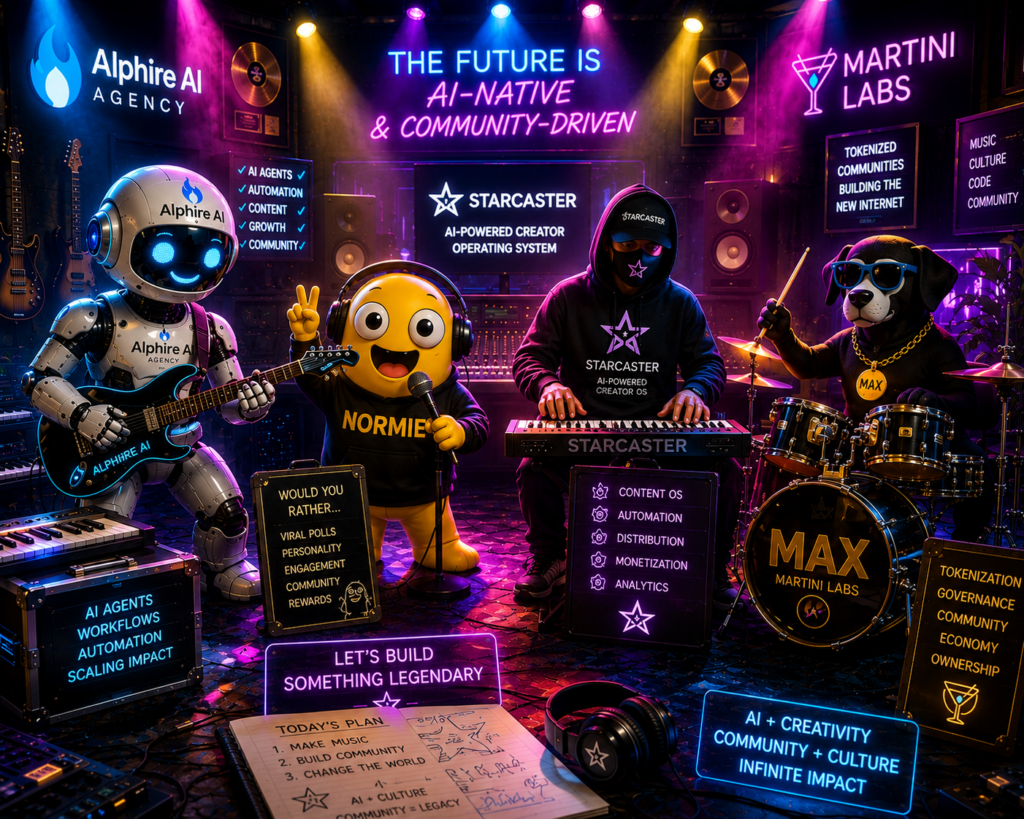
STARCASTER PRO
STARCASTER is being developed as:
an AI-powered Influencer Marketing Platform and creator operating system.
But underneath, the platform reflects many principles of vibe coding.
The ecosystem combines:
- AI workflows
- automation
- creator tools
- social engagement
- website building
- blog CMS systems
- AI content generation
- image/video generation
- streaming infrastructure
- AI agents
- social syndication
into one unified environment.
This dramatically lowers the complexity of building digital ecosystems.
Instead of stitching together dozens of disconnected tools, creators increasingly operate from:
centralized AI-native systems.
AI Agents Become Operational Teams
One of the most revolutionary aspects of vibe coding is the rise of:
AI agents.
AI agents increasingly function like:
- developers
- assistants
- researchers
- marketers
- operators
- moderators
- content creators
- automation systems
working continuously in the background.
This means software increasingly behaves like:
autonomous infrastructure.
A creator may soon manage entire ecosystems with:
- a few prompts
- AI workflows
- automation pipelines
- creator operating systems
instead of large technical teams.
 Normie: A Live Example of AI-Native Creation
One fascinating example of vibe-coded ecosystem building is:
Normie
Normie is not simply:
- a meme coin
- a polling app
- a social project
It is a live experiment in:
- AI-powered community systems
- SocialFi
- behavioral engagement
- tokenized participation
- creator automation
- AI-generated content
- viral distribution
The project leverages:
- AI workflows
- creator infrastructure
- social syndication
- automated media pipelines
- image generation
- behavioral engagement systems
powered by the broader STARCASTER ecosystem.
This represents something important:
AI-native communities built through vibe-coded infrastructure.
Martini Labs and the Tokenized Internet
Another major layer of this future is:
Martini Labs
Martini Labs explores:
- tokenized ecosystems
- SocialFi mechanics
- creator economies
- digital participation systems
- community infrastructure
The intersection between:
- AI
- vibe coding
- tokenization
- creator economies
- community systems
is incredibly powerful.
Because the future internet may increasingly consist of:
programmable communities.
Where:
- AI automates operations
- tokens coordinate participation
- creators manage ecosystems
- communities generate value
- software evolves dynamically
Software Is Becoming Dynamic
Traditional software was:
- static
- rigid
- manually updated
- developer-controlled
AI-native systems are increasingly:
- adaptive
- conversational
- evolving
- autonomous
- self-optimizing
This creates a future where software behaves less like:
tools
and more like:
living systems.
The End of SaaS Fragmentation
One major reason vibe coding is so disruptive is because traditional SaaS became:
- bloated
- fragmented
- expensive
- disconnected
Businesses often manage:
- dozens of subscriptions
- disconnected workflows
- siloed systems
- duplicated operations
AI-native platforms increasingly unify these layers together.
This is why ecosystems like:
are so interesting.
They aim to converge:
- AI agents
- creator infrastructure
- automation
- engagement
- streaming
- publishing
- growth systems
- community management
into unified intelligent platforms.
The Democratization of Creation
Perhaps the most important impact of vibe coding is:
democratization.
Historically, powerful software creation was limited to:
- technical elites
- large companies
- venture-backed startups
AI changes this.
Now:
- creators
- communities
- entrepreneurs
- artists
- streamers
- marketers
- meme communities
can increasingly build sophisticated ecosystems themselves.
This creates:
mass entrepreneurial empowerment.
The Future of Software
The next generation of software may not be:
- manually coded applications
- static SaaS dashboards
- rigid enterprise systems
Instead, it may become:
- AI-orchestrated ecosystems
- autonomous workflow systems
- creator operating systems
- tokenized communities
- intelligent digital agents
- conversational infrastructure
Software increasingly becomes:
programmable intelligence.
Final Thoughts
Vibe coding is not just:
“AI helping people code.”
It is:
a complete shift in how software is imagined, created, deployed, and operated.
The future belongs to:
- creators who move fast
- AI-native systems
- autonomous workflows
- programmable communities
- intelligent ecosystems
Companies like:
offer an early glimpse into what this next era could look like:
A world where:
- AI builds alongside humans
- creators become software companies
- communities become ecosystems
- and software evolves at the speed of imagination.