
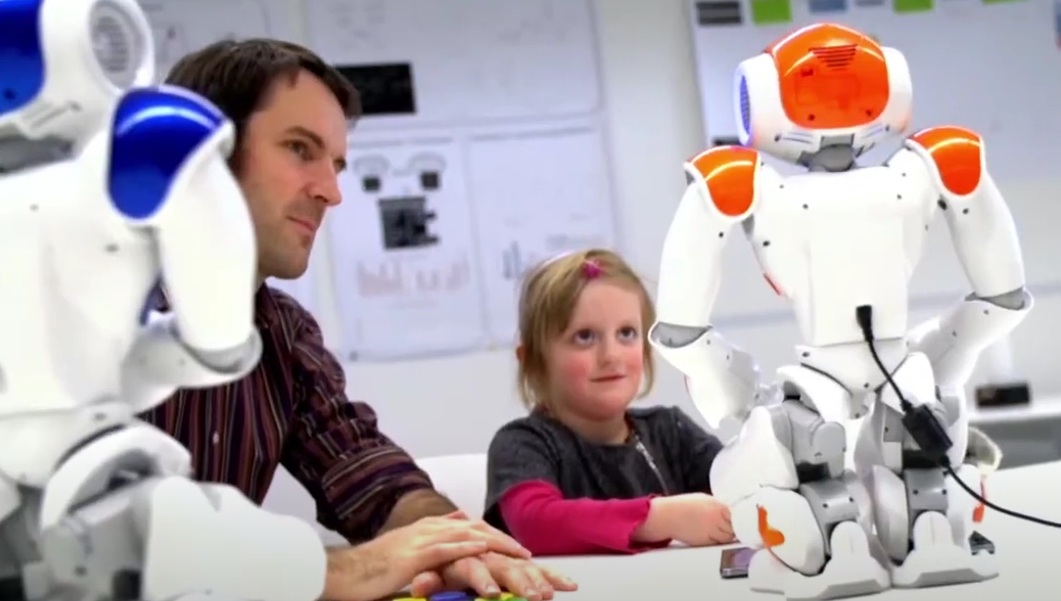
The Future Is Automated: How Robotics Can Transform Your Business
How small and medium-sized businesses can reduce costs, boost efficiency, and stay competitive.
Executive takeaways
-
Start small, scale fast. Pilot one high-ROI use case before expanding.
-
Cobots and AMRs are SMB-friendly. Modern robots are safer, cheaper, and easier to deploy.
-
Pair robotics with process redesign. Automation amplifies good processes; it exposes bad ones.
-
Measure relentlessly. Track cycle time, first-pass yield, uptime, and payback to guide scale-up.
IMD’s TransformTECH: Harness intelligent robotics to change your business
What “robotics” means for SMBs (beyond factory arms)
-
Collaborative robots (cobots): Lightweight arms that work beside people for pick-and-place, packaging, machine tending, sanding/polishing, screwdriving. Quick to reprogram; mobile bases add flexibility.
-
AMRs/AGVs (mobile robots): Move goods and carts in warehouses, backrooms, kitchens, and clinics; AMRs navigate dynamically without floor tape.
-
Service robots: Front-of-house greeters, delivery runners, inventory scanners, floor scrubbers.
-
Vision & gripping: AI cameras inspect quality; soft/Adaptive grippers handle varied items.
-
RPA (“software robots”): Automate repetitive computer tasks (orders, invoicing, inventory sync).
-
Edge AI + IoT: Sensors feed robots real-time data; models improve routing, picking, and inspection.
Where automation pays first (common SMB use cases)
Operations & Warehouse
-
Put-wall sorting, case packing, end-of-line palletizing
-
AMR replenishment from backroom to line; cycle counting with vision
-
Quality inspection (defect, label, seal, fill-level)
Retail & Hospitality
-
Shelf scanning, price audit, floor cleaning, back-of-house dish/pan washing, bussing
-
Food running and last-50-meters delivery robots
Light Manufacturing / Fabrication
-
Machine tending (CNC, injection molding), deburring, sanding, gluing, welding support
-
Kitting and small-parts handling with vision picking
Healthcare & Labs
-
Sample transport (AMR), pharmacy runs, UV disinfection, inventory checks
Back Office (RPA)
-
Order entry, reconciliations, returns processing, appointment reminders, AR follow-ups
A simple ROI model (use it before you buy)
-
Annual labor/time saved = (Tasks/day × minutes saved × working days) ÷ 60
-
Annual $ benefit = (Hours saved × blended wage/benefits) + scrap reduction + throughput lift margin
-
Net annual impact = Annual $ benefit − (Robot lease/purchase amortization + maintenance + integration + training)
-
Payback period (months) = (Upfront costs ÷ Net monthly impact)
Example:
-
Cobots palletize 300 cases/day, saving 2 minutes per 25-case pallet → 24 pallets/day → 48 minutes/day.
-
Add reduced injuries and fewer reworks worth $1,500/month.
-
Labor rate (w/benefits) $28/hour, 260 days/year.
-
Hours saved/year = 48 min/day × 260 ÷ 60 = 208 hours → $5,824/year.
-
Total annual benefit = $5,824 + ($1,500 × 12 = $18,000) = $23,824.
-
If total annualized cost is $14,400, net = $9,424/year → payback on $12k setup ≈ 15 months.
Tip: If payback is ≤18 months and OEE/quality also improve, green-light the pilot.
6-step adoption roadmap
-
Map pain points (2 weeks).
-
Identify tasks that are dirty, dull, dangerous, or dear (costly).
-
Capture cycle times, changeovers, defect rates, injuries, overtime.
-
-
Select one high-leverage pilot.
-
Criteria: high repetition, stable workflow, easy interfaces, measurable ROI, worker support.
-
Score candidates on Impact (1–5) × Ease (1–5); pick scores ≥15.
-
-
Design for the whole workflow, not just the robot.
-
Upstream kitting, downstream staging, bin design, vision lighting, safety perimeters.
-
Standardize work instructions; define exception handling.
-
-
Procure & integrate.
-
Favor modular gear (quick-change grippers, carts, conveyors).
-
Use no-code/low-code robot programming where possible.
-
-
Train & change-manage.
-
Cross-train operators as “robot supervisors.”
-
Communicate “robots remove drudgery, people move up the value chain.”
-
-
Measure, learn, scale.
-
Track baseline vs. post-pilot: cycle time, FPY, OEE, injuries, uptime, $/unit.
-
If targets met, replicate to the next line/site.
-
Budgeting & ownership models (SMB-friendly)
-
Buy: Higher upfront, lowest TCO if utilization is high and process is stable.
-
Lease/Robot-as-a-Service (RaaS): Lower upfront; subscription includes maintenance, upgrades; great for pilots and seasonal demand.
-
Hybrid: Lease the robot, buy end-effectors/fixtures you’ll keep.
Hidden costs to include: End-effectors, vision, fixtures, network drops, carts/racks, safety, integration time, staff training, downtime during install.
Safety, compliance, and risk
-
Standards: ISO 10218/TS 15066 (cobots), local OSHA equivalents, electrical and guarding requirements.
-
Risk assessment: Pinch points, payload, speed limits, e-stops, safe zones.
-
Cybersecurity: Segment robot networks (VLANs), change default creds, log access, patch routinely.
-
Business continuity: Stock critical spares; define manual fallback procedures.
Data & AI: make robots “learners,” not just movers
-
Vision AI improves pick accuracy and defect detection.
-
Reinforcement learning tunes paths and grip settings over time.
-
Fleet orchestration assigns tasks to AMRs dynamically based on queue length and traffic.
-
Dashboards: expose live KPIs; tie into MES/WMS/ERP for closed-loop optimization.
People strategy: protect culture while you automate
-
Involve operators early. They know edge cases; they’ll make the system robust.
-
Upskill pathways: Robot tech, data ops, quality analyst, cell lead.
-
Redesign roles: Move people from repetitive motion to customer, quality, and creative work.
Vendor & solution checklist (RFP lite)
-
Proven SMB deployments similar to yours
-
Support SLAs, on-site response times, spare-parts availability
-
Ease of programming & changeovers (minutes, not days)
-
Open APIs for WMS/ERP/MES integration
-
Safety certification and documented risk assessments
-
Transparent TCO and upgrade path (new grippers, added SKUs)
Pilot scorecard (fill this in)
-
Target metrics:
-
Cycle time: from ____ to ____
-
First-pass yield: from ____% to ____%
-
Uptime: from ____% to ____%
-
Units/hour: from ____ to ____
-
Injury rate/OT: from ____ to ____
-
Payback: ≤ ____ months
-
-
Owner: _________ • Start: _________ • Review: _________
A 90-day SMB plan
Days 1–15: Process mapping, shortlist 3 use cases, pick one pilot.
Days 16–45: Vendor demos, on-site trials, finalize cell design & quote.
Days 46–75: Install, program, safety verify, operator training.
Days 76–90: Stabilize, capture metrics, decide scale/iterate.
Common pitfalls (and fixes)
-
Automating chaos: Fix the process first (5S, standard work).
-
Over-customizing: Start with off-the-shelf where possible.
-
Ignoring maintenance: Assign ownership; schedule PM; keep a spare-parts kit.
-
No data baseline: Measure before installation so gains are credible.
-
Change resistance: Frame automation as upskilling; tie to wage progression.
Final word
Automation isn’t a moonshot anymore—it’s a practical stepwise upgrade. Pick a repetitive, measurable task; deploy a right-sized robot; instrument the work; prove ROI; and scale. Do this repeatedly and you’ll reduce costs, improve consistency, and build a moat your competitors will struggle to cross.
CRYPTO RICH
CryptoRich. io is a hub for bold crypto insights, high-conviction altcoin picks, and market-defying trading strategies – built for traders who don’t just ride the wave, but create it. It’s where meme culture meets smart money.
Crypto Rich ($RICH) CA: GfTtq35nXTBkKLrt1o6JtrN5gxxtzCeNqQpAFG7JiBq2